4,400 GLP-1 Lawsuits Filed: What Firms Need to Know

CEO & Founder at LlamaLab
GLP-1 Litigation Reaches 4,400+ Lawsuits as Expert Challenges Approach
Updated August 22, 2026: The original February 2026 reporting anticipated bellwether trials by mid-2026. That has not occurred: no bellwether trial has been held or scheduled in either GLP-1 MDL. Case Management Order No. 32 (April 30, 2026) set Rule 702 and summary judgment briefing instead, with an expert hearing scheduled for September 10-18, 2026. The bellwether references below have been corrected.
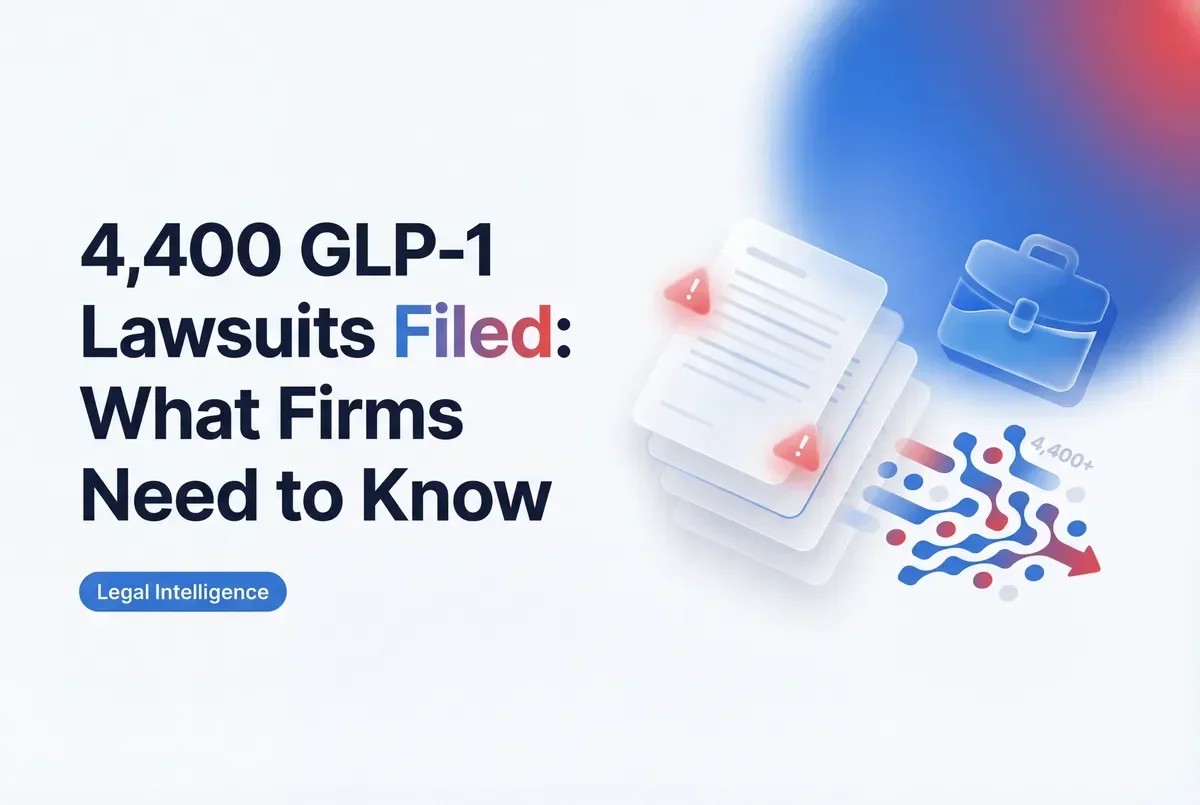
Litigation against GLP-1 drug manufacturers has reached a significant milestone. At least 4,400 patients have filed lawsuits alleging Ozempic, Wegovy, and Mounjaro caused severe gastrointestinal injuries and vision loss, according to USA Today's analysis of consolidated federal and state litigation. With 75% of federal cases alleging gastroparesis (a condition where the stomach fails to empty properly) and a Rule 702 expert hearing now set for September 2026, law firms are preparing case files for judicial scrutiny.
The litigation targets medications prescribed to more than 31 million Americans. A KFF poll identified that 12% of U.S. adults take a GLP-1 medication for weight loss, diabetes, or related conditions, creating one of the largest potential claimant populations in recent pharmaceutical litigation.
Patients have filed GLP-1 lawsuits (USA Today, Jan 2026)
Of federal cases allege gastroparesis
MDL case growth since January 2025
Scientific Research Underlying the Claims
The claims rely on peer-reviewed epidemiological research. A 2023 JAMA study found GLP-1 users face elevated risks compared to users of other weight loss medications: a 3.67 times higher risk of gastroparesis, a 4.22 times higher risk of bowel obstruction, and a 9.09 times higher risk of pancreatitis.
Additionally, a Harvard study published in JAMA Ophthalmology in July 2024 reported an association between semaglutide (the active ingredient in Ozempic and Wegovy) and non-arteritic anterior ischemic optic neuropathy (NAION). The risk was 4.28 times higher for diabetic patients and 7.64 times higher for weight loss patients.
FDA Label Update: October 2025
Plaintiffs argue these risks required earlier and more specific warnings. "We think that the full panoply of conditions that this set of drugs can cause are not fully warned of," Jonathan Orent, co-lead counsel for plaintiffs in the MDL, told USA Today.
Two MDLs, Two Injury Categories
The litigation proceeds in parallel federal forums. MDL 3094, established in February 2024 in the Eastern District of Pennsylvania, consolidates gastrointestinal injury claims. A second proceeding, MDL 3163, was created in December 2025 specifically for NAION vision loss claims.
According to court filings cited by USA Today, the distribution of claims in the GI litigation includes:
- 75% alleging gastroparesis
- 18% alleging ileus
- 18% alleging intestinal obstructions
- 8% alleging gallbladder injuries requiring surgery
- 110+ plaintiffs alleging severe vision impairment or blindness
Traditional Approach vs LlamaLab Solution
Traditional Approach
Delayed Warning Labels
Prescribing updates occurred after adverse event reports accumulated in post-market use
General Symptom Warnings
Labels listed nausea and vomiting without specific gastroparesis warnings for years
Regulatory Disparity
European regulators added a NAION vision warning while U.S. labeling did not
Hidden & Unpredictable Costs
Per-page fees, rush charges, and surprise bills that blow up your budget
LlamaLab Solution
Reverse Provider Search
Uses insurance data to fill in treatment gaps clients don't always remember across PCPs and specialists
Objective Testing Verification
Flags gastric emptying scintigraphy and motility studies required by court orders
Recoverable Invoicing
Itemized per-case invoices flow through as recoverable disbursements on settlement statements
Flat Transparent, Risk-free Pricing
1 flat fee covers all costs. Only pay full price for cases that authorize
Court-Ordered Diagnostic Standards
An August 2025 case management order established specific evidentiary thresholds for the GI docket. Judge Karen S. Marston ruled that plaintiffs alleging gastroparesis must present objective diagnostic testing: gastric emptying scintigraphy, a validated breath test, or a wireless motility capsule study performed during the diagnostic workup.
The court excluded claims supported only by self-reported symptoms or unconfirmed clinical suspicion. Studies indicated retained gastric food on endoscopy has variable diagnostic accuracy, making formal motility testing mandatory.
Vision Loss Claim Requirements
For NAION lawsuits in MDL 3163, documentation requires ophthalmology records establishing sudden visual field loss, ruling out giant cell arteritis or other etiologies, and confirming the temporal sequence between GLP-1 administration and symptom onset.
Evidentiary Preparation for 2026
No bellwether trial has been held or scheduled; Case Management Order No. 32 (April 30, 2026) set Rule 702 and summary judgment briefing instead, with the expert hearing scheduled for September 10-18, 2026, according to MDL Update. Bellwether selection, if any, would follow the general-causation ruling, and it will depend on complete records.
Key Points
Essential takeaways from this article
Record Collection Scope
A typical GLP-1 claimant file involves records across several healthcare settings:
- Prescribing physicians (primary care, endocrinologists, or bariatric specialists)
- Retail and mail-order pharmacies verifying dispense dates and dosages
- Gastroenterologists who performed gastric emptying studies
- Emergency departments and hospitals for acute episodes and admissions
- Ophthalmologists and neuro-ophthalmologists for vision loss claims
LlamaLab's mass tort medical record retrieval returns records in 4 days on average (with ~30-40% returned same-day on electronic requests) and uses insurance data to surface treatment locations clients don't always remember. Invoices are itemized per case to flow through as recoverable case disbursements on settlement statements.
Summary
The GLP-1 litigation has grown to over 4,400 consolidated cases across two federal MDLs. With tens of millions of active prescriptions nationwide and the September 2026 Rule 702 hearing approaching, case viability depends on objective diagnostic documentation and verified exposure histories.
Build Stronger GLP-1 Cases with Complete Medical Evidence
LlamaLab retrieves records across all treating providers in 4 days on average, using reverse provider search with insurance data to verify objective testing.
Sources: USA Today, JAMA, JAMA Ophthalmology, FDA, Reuters, KFF, MDL Update, Drugwatch, About Lawsuits.
Stay Updated with Latest Insights
Get the latest articles about medical record retrieval and legal tech delivered to your inbox.