GLP-1 Vision Loss MDL Grows 70% Ahead of September Hearings

CEO & Founder at LlamaLab
GLP-1 Vision-Loss Docket Accelerates as Both MDLs Approach Decisive Science Rulings
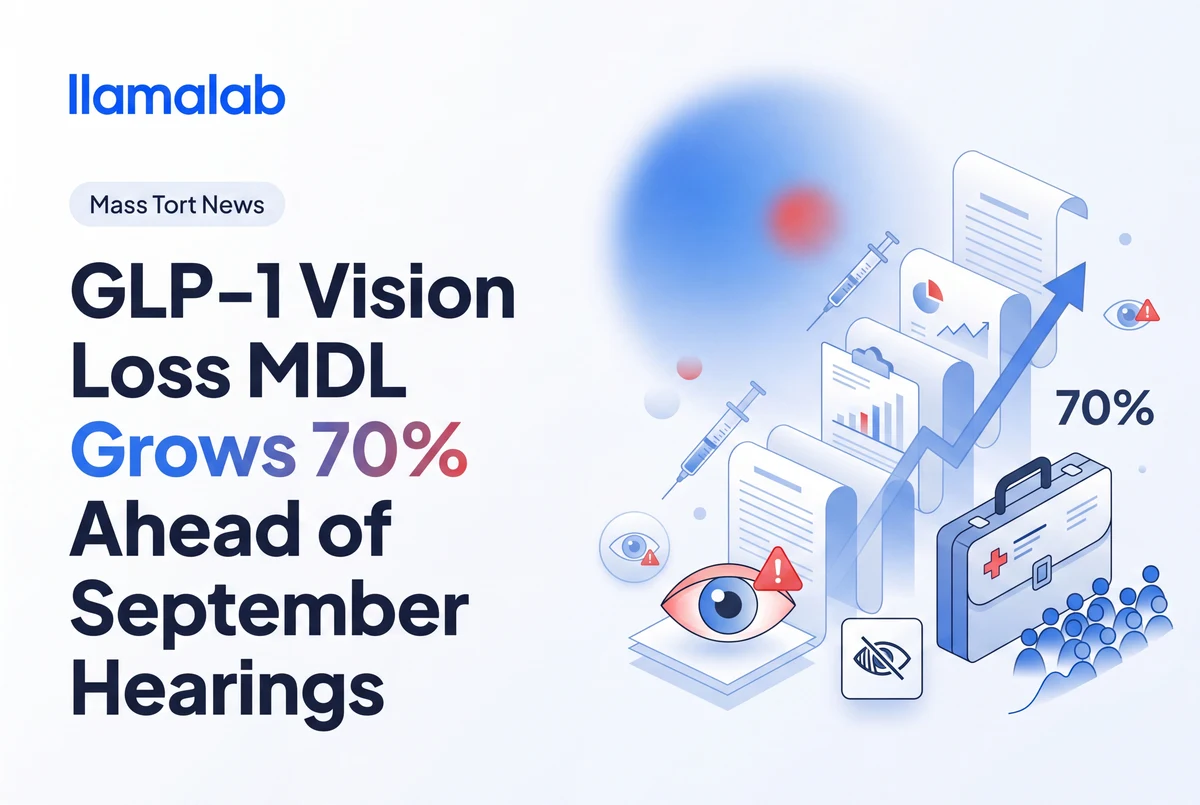
The federal MDL consolidating GLP-1 vision-loss claims reached 146 pending cases on the July 1, 2026 JPML report, up from 86 in May, representing roughly 70% growth over two months. MDL 3163, established in December 2025 for claims that semaglutide-class medications cause non-arteritic anterior ischemic optic neuropathy (NAION), conducted a "Science Day" on June 2, where Judge Karen S. Marston heard scientific presentations from both parties regarding general causation.
The vision-loss docket represents an active front in the broader GLP-1 litigation. The gastrointestinal-injury proceeding, MDL 3094 (covering gastroparesis, ileus, and bowel obstruction claims against Ozempic, Wegovy, Mounjaro, and related medications), reached 3,848 pending cases on the same report. Summary judgment briefing concludes August 7, with Rule 702 expert-admissibility hearings scheduled for September 10-18, 2026. Both proceedings are presided over by Judge Marston in the Eastern District of Pennsylvania.
In NAION MDL 3163, up ~70% since May
In GI-injury MDL 3094 as of July 1, 2026
Rule 702 hearings in the GI MDL
Two MDLs, One Court
The Two GLP-1 MDLs
| Factor | MDL 3094 (GI Injury) | MDL 3163 (NAION Vision Loss) |
|---|---|---|
| Pending cases (July 2026) | 3,848 | 146 |
| Consolidation date | February 2024 | December 15, 2025 |
| Primary injuries | Gastroparesis, ileus, bowel obstruction | NAION: sudden, permanent vision loss |
| Named defendants | Novo Nordisk, Eli Lilly | Novo Nordisk, Eli Lilly |
| Next major milestone | Rule 702 hearings Sept 10-18, 2026 | Post-Science Day scheduling order |
| U.S. label status | Gastroparesis warning added Oct 2025 | No FDA NAION warning as of July 2026 |
While smaller in case count, the NAION docket involves permanent injury claims. Vision loss is sudden and generally irreversible, with no standard restorative therapy. Plaintiffs' failure-to-warn claims point to regulatory divergence: the European Medicines Agency added NAION as a 'very rare' side effect to semaglutide labeling in June 2025, while U.S. labeling does not include a NAION warning.
Research Behind Vision-Loss Claims
The central scientific reference in the litigation is a matched cohort study conducted by researchers at Harvard-affiliated Massachusetts Eye and Ear. Published in JAMA Ophthalmology in July 2024, the analysis of 16,827 patients found semaglutide users had a hazard ratio of 4.28 for NAION among diabetic patients and 7.64 among overweight or obese patients compared with patients taking non-GLP-1 medications. Cumulative 36-month NAION incidence reached 8.9% in the diabetic semaglutide cohort versus 1.8% in the control group.
Scientific Admissibility Context
Impact of September Expert Hearings
Rule 702 hearings represent a central milestone in pharmaceutical multidistrict litigation. If the court admits plaintiffs' general-causation experts in the GI MDL, bellwether trial scheduling will advance. If expert testimony is excluded or substantially narrowed, GI claims will face significant hurdles, while the NAION docket proceeds under its distinct scientific record.
GLP-1 Case Dynamics, Mid-2026
Case Challenges
Science Gate Ahead
Rule 702 rulings in September will determine whether GI causation experts reach juries
Scattered Prescription Trails
GLP-1 drugs are prescribed by endocrinologists, PCPs, and telehealth platforms across disparate systems
Alternative-Cause Defenses
Underlying diabetes elevates baseline NAION and GI risks, prompting specific causation disputes
How Firms Are Responding
Fast Record Retrieval
Retrieval averages 4 days with ~30-40% returned same-day on electronic requests
Reverse Provider Search
Uses insurance data to fill in treatment gaps clients don't always remember across clinics and telehealth
Recoverable Disbursement
Itemized per-case invoices flow through as recoverable case disbursements on settlement statements
Documenting NAION Claims
Screening criteria generally require verified use of a brand GLP-1 drug (such as Ozempic, Wegovy, Rybelsus, Mounjaro, Zepbound, or Trulicity) prior to a NAION diagnosis confirmed by an ophthalmologist or neuro-ophthalmologist.
Documenting drug exposure requires coordinating records across multiple entities: prescribing clinicians, compounding or retail pharmacies, and treating eye specialists. LlamaLab retrieves records in 4 days on average (with ~30-40% returned same-day on electronic requests) and uses insurance data to surface treatment locations clients don't always remember. Invoices are itemized per case to flow through as recoverable case disbursements on settlement statements. For additional background on GLP-1 litigation trends, see LlamaLab's GLP-1 litigation analysis.
Next Steps
Key Points
Essential takeaways from this article
Summary
The GLP-1 litigation encompasses two distinct dockets: a 3,800-case GI proceeding approaching Rule 702 determinations, and a growing 146-case NAION vision-loss proceeding with permanent injury claims.
Firms managing GLP-1 inventories should secure complete prescription records, pharmacy logs, and specialist diagnosis files to verify exposure timelines and injury documentation.
Working Up GLP-1 Cases?
LlamaLab retrieves pharmacy fill histories, prescriber records, and neuro-ophthalmology files in 4 days on average, using reverse provider search with insurance data to fill in treatment gaps.
Sources: JPML Statistics Report, July 1, 2026, JAMA Ophthalmology: Hathaway et al. 2024, Mass Eye and Ear Press Release, MDL Update: MDL 3163, Lawsuit Status Guide: MDL 3094 Schedule, Miller & Zois: GLP-1 Litigation Updates. Case counts current as of the July 1, 2026 JPML report.
This article provides general information about GLP-1 litigation developments and should not be construed as legal or medical advice. Consult with qualified professionals for advice specific to your situation.
Stay Updated with Latest Insights
Get the latest articles about medical record retrieval and legal tech delivered to your inbox.