Guides & Resources
8 min read
Medical Record Retrieval Software vs Service vs System
Retrieval software gives your staff a tool. A retrieval service fills requests. A retrieval system owns the whole job. How law firms should choose.
Read
24 articles in this category
Retrieval software gives your staff a tool. A retrieval service fills requests. A retrieval system owns the whole job. How law firms should choose.

Where AI genuinely changes a law firm's records workflow, where it changes nothing, and what to verify before believing a retrieval vendor's AI claim.
A line-by-line model for calculating the real cost of internal medical record retrieval, including the one expense category that never shows up on an invoice.

Automated medical record retrieval for PI firms: the four steps to automate in order, what to keep human, and four metrics that show it worked.
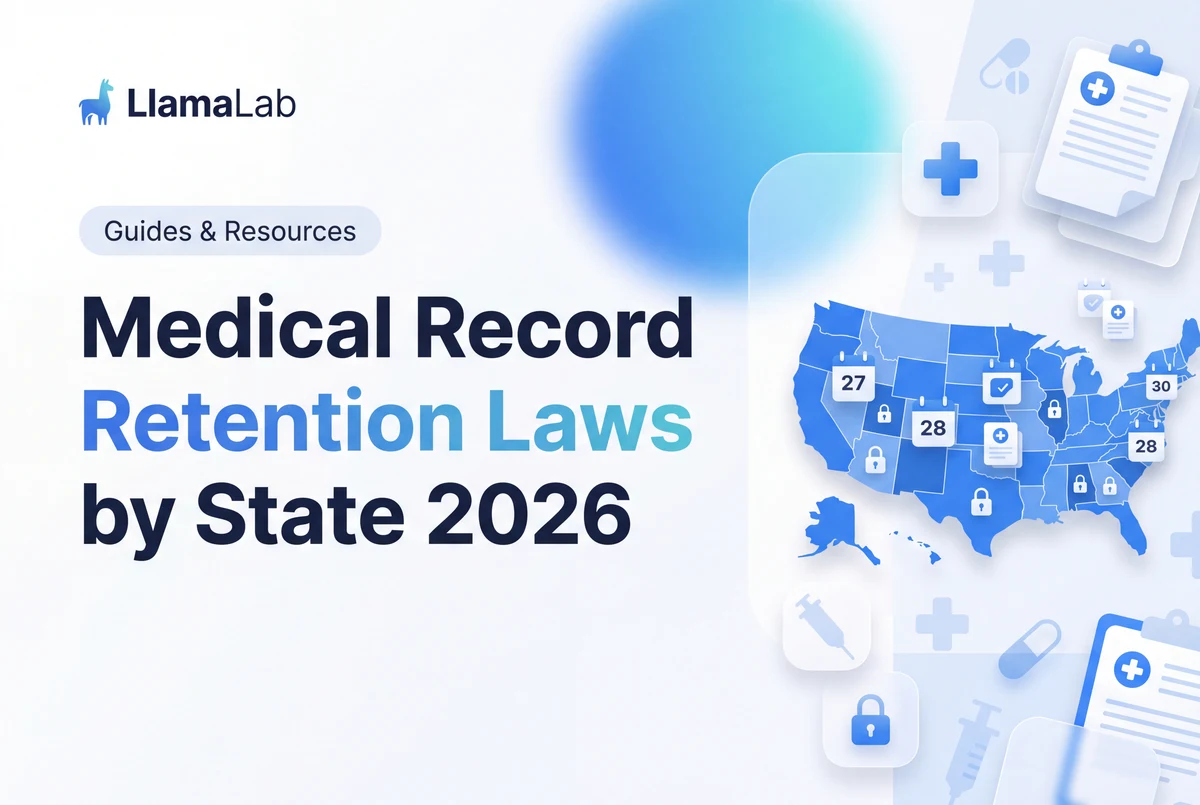
The 50-state guide to how long hospitals and physicians must keep medical records, from no state mandate in Wyoming to 26 years in Washington.
Navy says 88% of Camp Lejeune claims still lack DOJ evidence. A 2026 guide to proof of use and proof of injury by docket type.
How PI and litigation firms recover medical record retrieval as a case disbursement, and why staff time and software seats do not qualify.
What personal injury and mass tort firms should expect in 2026: 30 to 60 days in-house, 4 days on average with a modern retrieval service.

Hospitals can legally take 30 days plus a 30-day extension, and enforcement is rare: 54 OCR actions since 2019 against roughly 31,000 complaints a year.
Most PI firms stitch 4-5 vendors together for records. End-to-end platforms collapse authorization, retrieval, analysis, and case analytics into one pipeline.
158 active MDLs and 197K pending cases. How firms manage medical record retrieval at mass tort scale without losing weeks.
The first HIPAA Security Rule update in 13 years mandates MFA, encryption, and annual audits. What law firms must prepare now.

OCR launched civil enforcement of substance use disorder record rules on Feb 16. Penalties now mirror HIPAA.
Clients do not always recall every treating facility. How reverse provider search cross-references insurance and prescription data to uncover complete medical records.
Medical records fees by state for 2026: per-page and search fees for all 50 states and DC, and why HIPAA's $6.50 fee doesn't apply to attorney requests.

Rule 803(6) gets records into evidence, but authentication failures get them thrown out. The rules every litigator needs.
When to subpoena medical records vs. use a HIPAA authorization: HIPAA subpoena rules, 7-14 vs. 30-45 day timelines, and mistakes that get requests rejected.
HIPAA gives providers 30 days, but expedited services deliver in 3-7. Here's every timeline attorneys need to know.

In-house paralegals are overhead. Outsourced retrieval is a recoverable case expense. Here's the math on why this shift saves firms $700K+.
Avoid common vendor pitfalls that cost law firms time and money. What questions to ask, pricing red flags to watch for, and how to evaluate retrieval partners.

How to request and receive complete medical records through LlamaLab, with 4-day average turnaround, reverse provider search, and clinical indexing.

How effective medical records management strengthens legal cases, improves client outcomes, and streamlines law firm workflows.

How to properly document, allocate, and recover medical record expenses in litigation, maximizing case value while maintaining ethical compliance.
How staff hours, case delays, and unrecovered disbursements impact law firm profitability, and how to structure retrieval as a recoverable case expense.