Beyond Paralegal Chronologies: How AI Transforms Medical Record Review

Senior Product Manager at LlamaLab
Law firms handling personal injury, medical malpractice, and mass tort claims have traditionally relied on manual medical chronologies to summarize patient care. While chronologies provide a structured overview, compiling them by hand across thousands of pages is time-consuming and prone to omissions.
We were spending over 15 hours per case on medical chronologies, and still finding that critical details were being missed. It created friction for both paralegals and attorneys.
Managing PartnerPersonal Injury Law Firm
Challenges of manual chronology creation
Manual medical record review in litigation firms presents several operational hurdles:
A paralegal reviews hundreds or thousands of pages of medical charts to extract dates, diagnoses, procedures, and provider notes into a static document.
Key Points
Essential takeaways from this article
Technical advances in medical record analysis
Modern legal technology platforms provide tools that change how attorneys review and verify medical documentation.
Full-text search across all case records
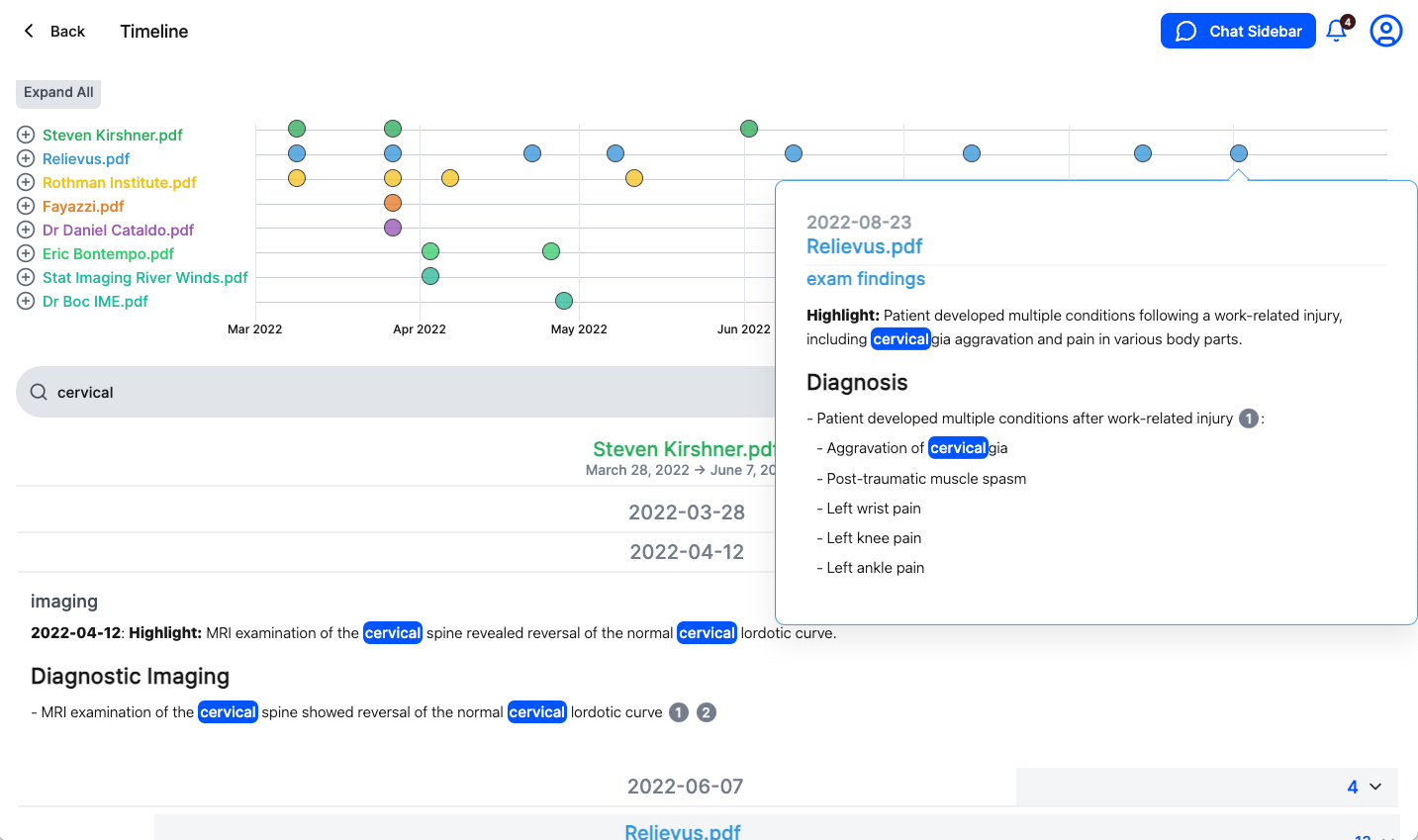
Optical character recognition and semantic search allow legal teams to search across thousands of pages of medical files instantly. Attorneys can locate every reference to:
- Specific medications and dosages
- Reported symptoms and pain levels
- Treating providers and healthcare facilities
- Diagnostic and surgical procedure codes
- Key service dates and treatment gaps
Clinical query tools
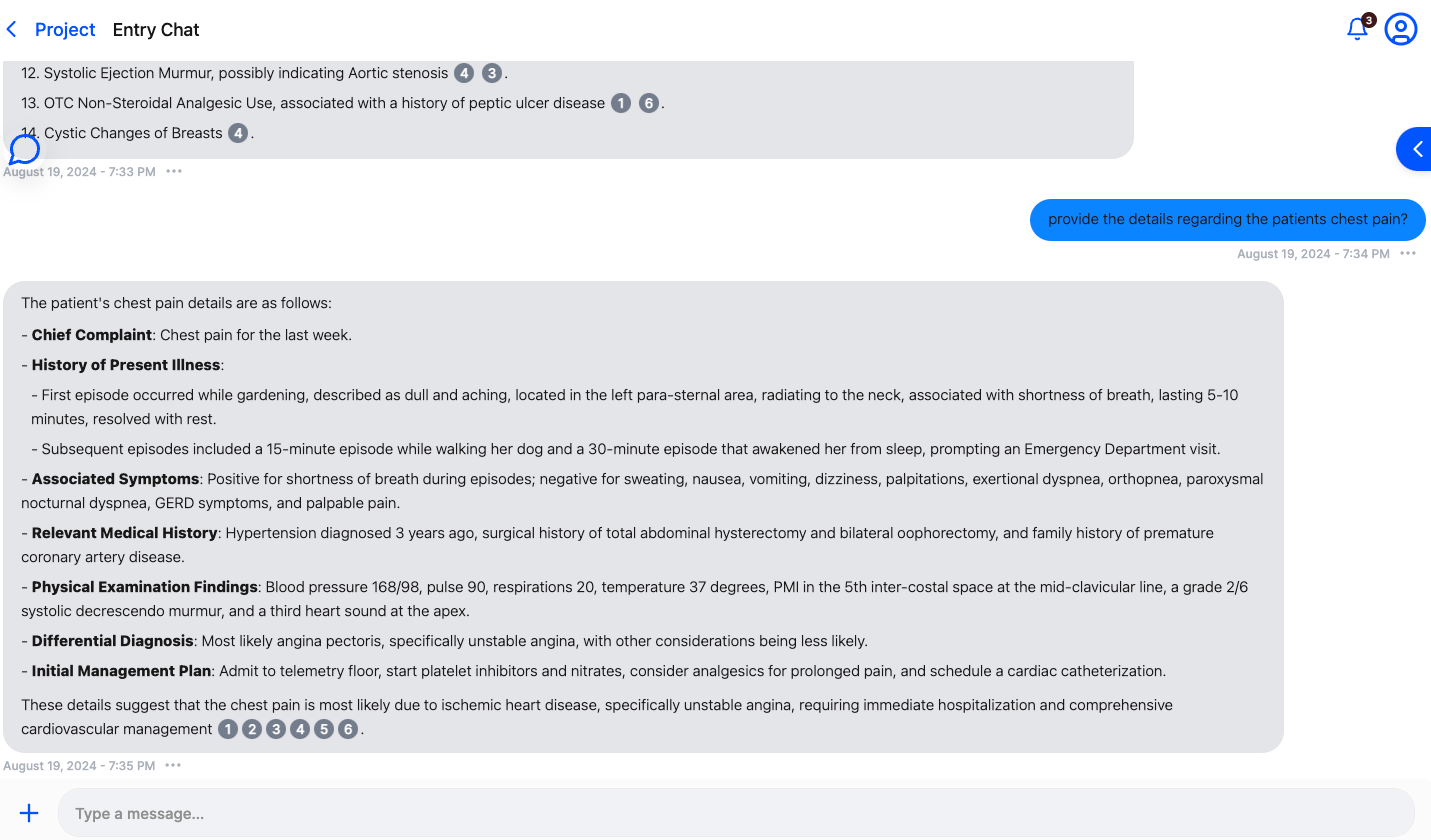
Natural language querying allows attorneys and paralegals to ask specific questions about a client's medical history:
- "When did the patient first report radicular symptoms?"
- "What medications were prescribed following the initial surgery?"
- "Did any treating physician note pre-existing degenerative conditions?"
- "Summarize all physical therapy visits and functional milestones."
The platform scans the underlying records and returns direct answers with source citations.
Direct source citations
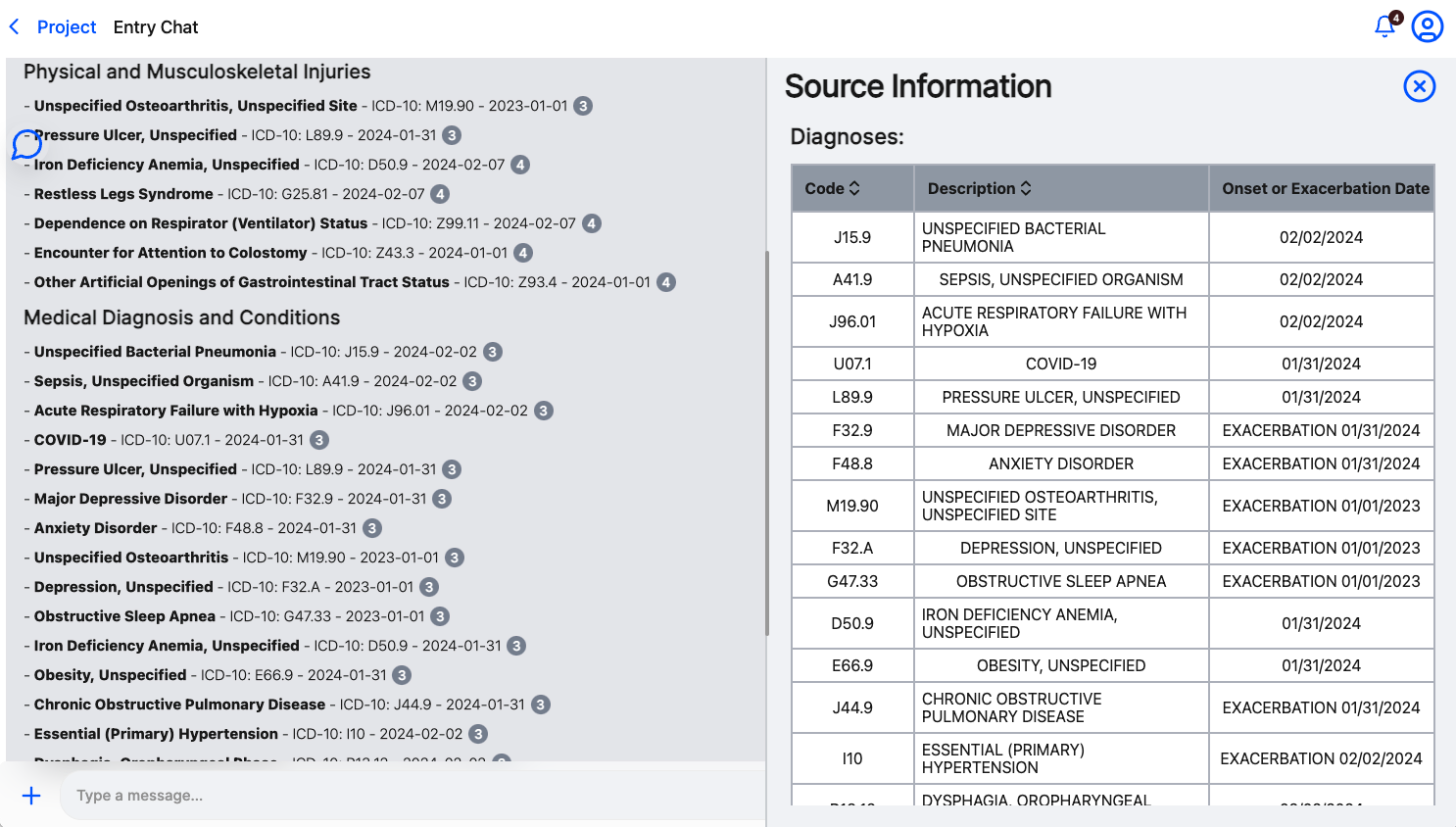
Every extracted finding, date, and diagnosis links directly to the underlying page in the original medical file. Clicking a citation opens the exact document and page, allowing attorneys to verify context immediately for depositions, demand packages, or motions.
Measurable operational results
Firms adopting automated medical record analysis report clear operational improvements:
Reduction in time spent reviewing medical records
More relevant clinical details discovered
Verification with one-click source access
Legal teams also gain qualitative advantages:
- Greater confidence in clinical fact verification
- Targeted case preparation with comprehensive medical timelines
- Well-documented demand letters backed by specific page citations
- Reduced administrative burden on paralegals and support staff
Tasks that took days now take minutes, and we are catching treatment notes that previously fell through the cracks in manual reviews.
Litigation AttorneyMedical Malpractice Specialist
Upgrading the review workflow
Static summaries are fixed documents that become outdated whenever new records arrive. Modern platforms continuously index incoming files so the complete case history remains accessible.
Key differences include:
- Dynamic indexing: Supplemental records integrate automatically without requiring a full manual rewrite.
- Comprehensive search: The complete record set remains searchable rather than limited to the items a reviewer selected for a summary.
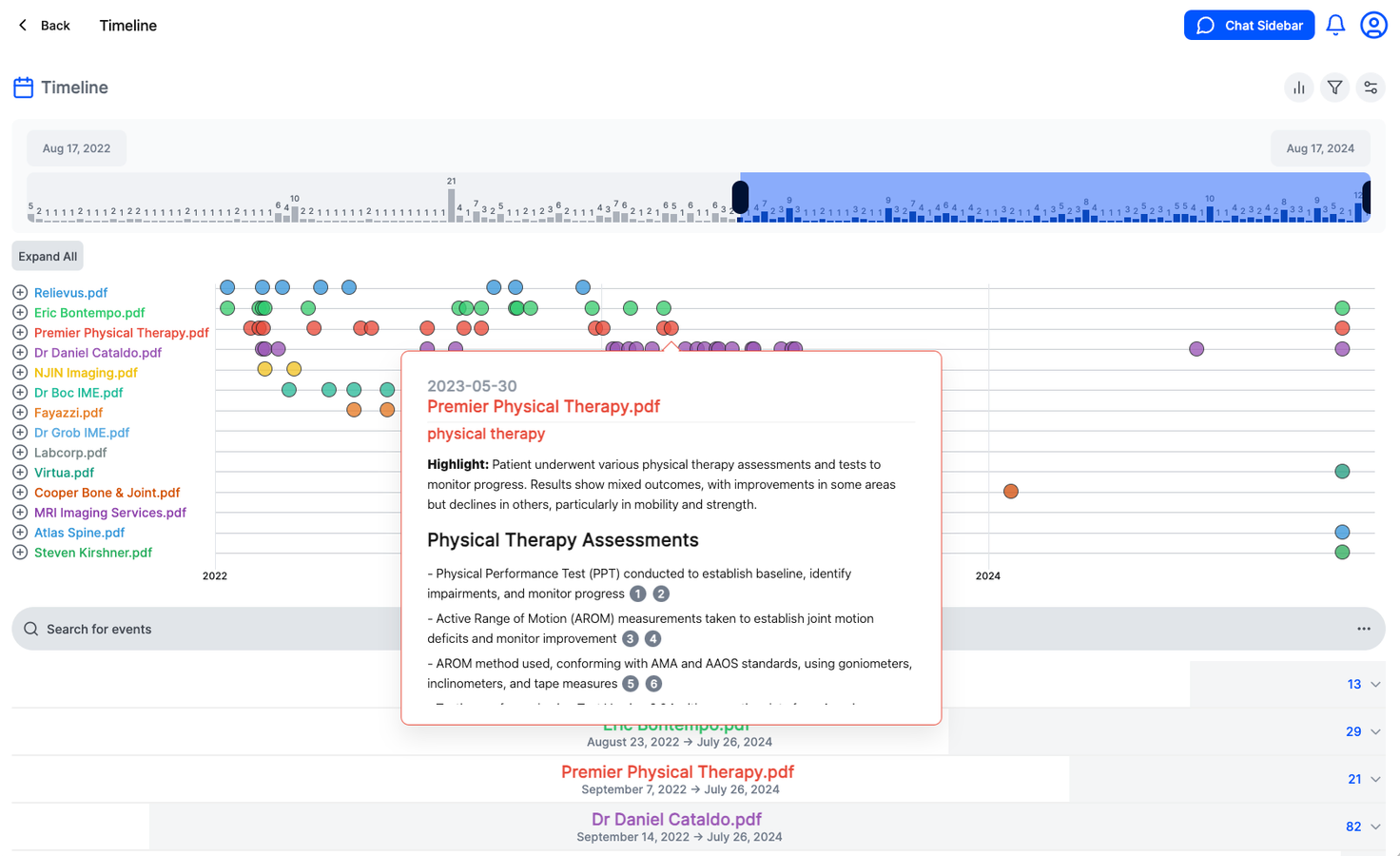
- Immediate access: Clinical chronologies generate upon document upload, accelerating case evaluation.
- Direct document linking: Summaries link directly to underlying source pages for one-click verification.
Changing paralegal roles
Automated analysis does not replace paralegals; it removes the repetitive burden of copying dates and diagnoses into tables.
With automated indexing and chronologies in place, paralegals focus on client communication, case strategy, witness coordination, and demand preparation, expanding the firm's total case capacity.
Traditional Approach vs LlamaLab Solution
Traditional Approach
Time-Intensive Workflow
8 to 10 hours of staff time spent manually drafting baseline summaries.
Limited Searchability
Static document files that cannot be dynamically queried.
Overlooked Details
Omissions in manual review lead to incomplete medical chronologies.
Manual Verification
Time-consuming searches through raw PDFs to confirm source facts.
Hidden & Unpredictable Costs
Per-page fees, rush charges, and surprise bills that blow up your budget
LlamaLab Solution
Instant Generation
System processes large record sets in minutes upon receipt.
Full-Text Search
Search across all case files with precise query filters.
Natural Language Queries
Query treatment details directly and receive sourced answers.
Direct Citations
Every clinical fact links directly to its source page in the original PDF.
Flat Transparent, Risk-free Pricing
1 flat fee covers all costs. Only pay full price for cases that authorize
Summary
Automating medical record review transforms how law firms evaluate clinical documentation. By replacing manual chronology entry with searchable, cited data, firms can evaluate cases faster, draft stronger settlement demands, and manage larger caseloads effectively.
Experience Modern Medical Record Analysis
Learn how LlamaLab's platform generates structured chronologies and instant citations for your litigation team.
Contact our team at support@llamalab.ai or schedule a walkthrough to see LlamaLab's medical record review tools in action.
Stay Updated with Latest Insights
Get the latest articles about medical record retrieval and legal tech delivered to your inbox.